The global precious metals market operates under a series of internationally standardized conventions. In the West, both investment bullion and commodity market transactions (such as those through the London Bullion Market Association, or LBMA) are strictly measured in troy ounces (approximately 31.10 grams) and are typically 99.9% pure gold (24 karats).
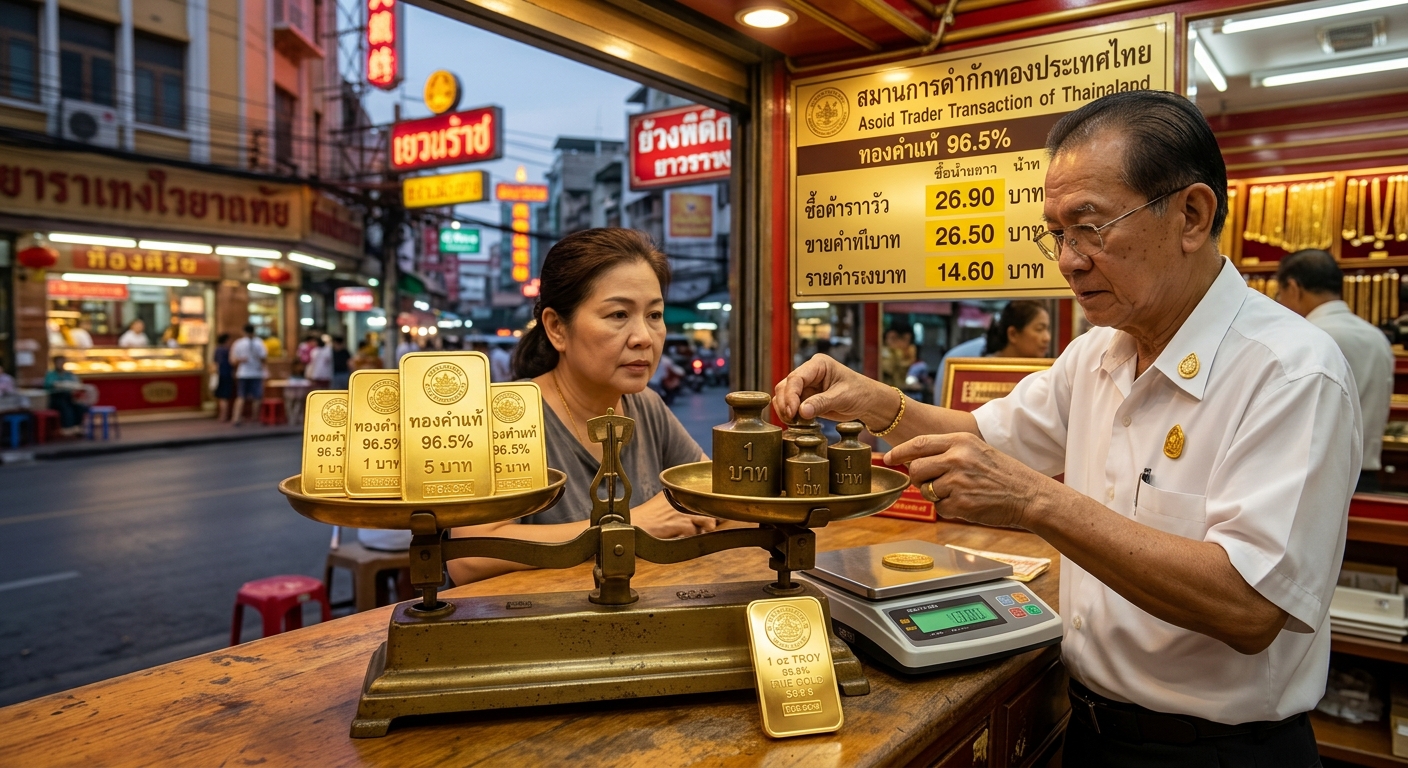
However, when entering Southeast Asia, this financial landscape changes radically. In Thailand, and specifically in the Yaowarat district, gold is not bought, quoted, or valued in troy ounces. The quintessential unit of measurement is the gold Baht (Thong Baht), and its standard commercial purity level is not 24K, but 96.5% (approximately 23 karats).
For a foreign investor, this metrological duality often generates initial confusion, raising the question of why Thailand, a key player in the Asian precious metals trade, maintains its own traditional metric system instead of adopting the global troy ounce standard. Below, we analyze the historical, cultural, and practical factors that explain why the Baht is used instead of Troy Ounces for selling gold in Thailand.
The historical roots of the traditional weight system in Southeast Asia
To understand why the Baht reigns supreme in Thai jewelry shops, it is necessary to look back at the commercial past of the Kingdom of Siam. Before the standardization of modern financial markets driven by Western globalization, commercial transactions in Southeast Asia depended on local weight systems based on tangible physical units.
Historically, the term “Baht” not only designated the kingdom’s circulating currency, but simultaneously functioned as a standard unit of mass for weighing silver and gold. Unlike nations that were colonized and forced to adopt British or European imperial systems, Thailand maintained its political and commercial sovereignty. This independence allowed its internal commercial structures to preserve their own units of measurement, which were passed down from generation to generation among the merchant families of Chinese origin who controlled the guild.
The use of the Baht instead of the troy ounce for trading gold in Thailand is not an archaic whim, but the result of a financial system adapted to cultural identity, a history of economic independence, and the practical needs of its population.
The divergence between the global troy ounce and the human scale of the Baht
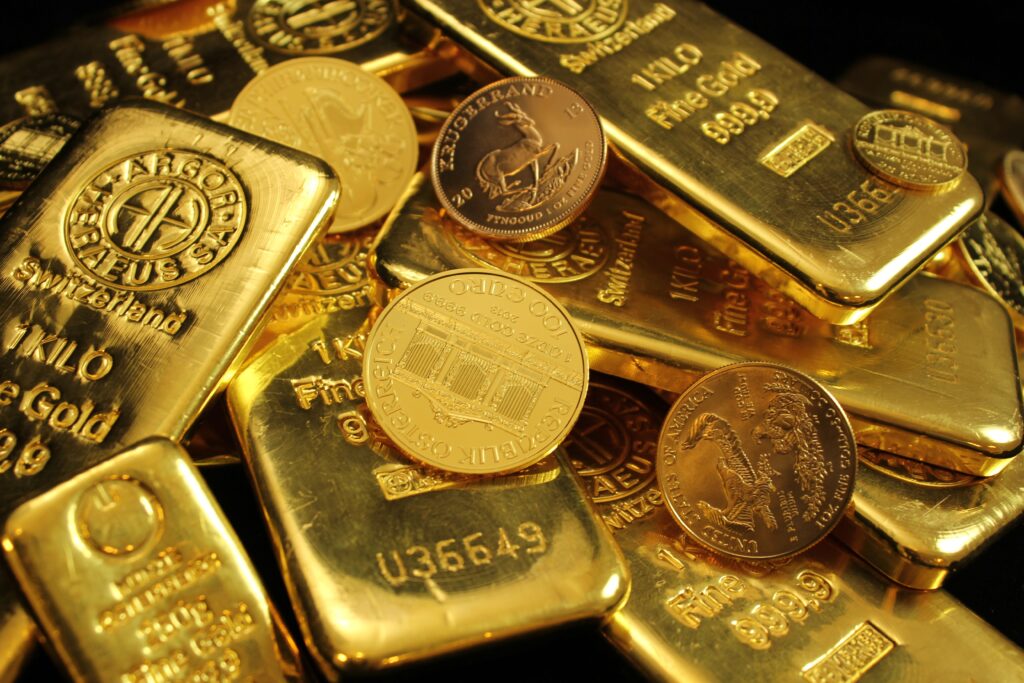
From a purely practical standpoint for the retail consumer, the troy ounce presents a significant logistical drawback: its size and nominal value are high for everyday family savings transactions. One troy ounce equals 31.1 grams of gold. With modern market fluctuations, buying a full ounce represents a considerable sum that is not always within reach of the average citizen who wants to save small portions of their monthly salary.
The Thai weight system solves this problem with a much more granular, manageable scale. In the local market, gold is conveniently fractioned into accessible units: 1 Baht of jewelry equals exactly 15.24 grams, or common fractions where it is possible to easily buy bars or pieces of 2 salung (half a Baht, i.e., 7.62 g), 1 salung (a quarter of a Baht, 3.81 g), or even smaller units such as the pae.
This modality turns physical gold in Thailand into a popular, direct savings tool, accessible to both a middle-income worker and a large institutional investor. While the troy ounce responds to the demands of global stock markets, the Baht represents the “human scale” of gold, being a unit of measurement designed so the ordinary citizen can accumulate, protect, and wear their wealth in a tangible, efficient manner deeply integrated into the country’s tradition.
The 96.5% purity standard
The choice to use the Baht as a unit goes hand in hand with adopting 96.5% purity (23 karats). In Western markets, investment bullion demands 99.9% (24K) because it is conceived to be stored in bank vaults or traded digitally. In contrast, in Thai culture, physical gold serves a dual function: a store of value and a wearable aesthetic ornament.
24K gold is extremely soft; a chain or bracelet made with that purity would deform, scratch, or wear down very easily with daily use. By setting the standard at 96.5% (adding small proportions of silver and copper), the pieces gain the structural hardness needed to be worn as heavy necklaces or bracelets (Thong Baht) and displayed daily without fear of breakage. Therefore, the Baht system was specifically designed to measure and trade this functional, durable gold.
Local transparency and regulation by the Gold Traders Association
Another reason the Thai market rejects the hegemony of the troy ounce in retail trade is the control and transparency provided by its trade association. The Gold Traders Association of Thailand daily issues official buying and selling prices expressed strictly in Thai Baht per Baht of gold (weight).
Although the base price takes the global gold quote (spot price in dollars per troy ounce) as an international reference, commercial algorithms and the display boards of Yaowarat jewelry shops automatically convert that value to the local metric. For the Thai consumer, calculating the value of their assets in Western grams or troy ounces feels foreign; the country’s natural financial language is the Baht.
The impact on liquidity
The persistence of the Baht over the troy ounce also reflects liquidity and local institutional trust. Any citizen holding a bar or piece of jewelry weighing exactly 1 or 2 Baht, certified by a member house of the trade association, can go to any jewelry shop in the country and liquidate it immediately at the official price of the day, with a minimal spread.
If an investor attempts to sell gold measured in Baht at a Western refinery operating under strict troy ounce and 24K rules, they will face technical barriers. Western refineries or dealers will rarely accept the hallmark or stamp of a Thai workshop as a direct guarantee of purity. To certify the metal’s value, they will subject the pieces to destructive testing or spectrometry, applying a significant discount off the international spot price to cover the operational cost of melting and refining the gold to the 24K commercial standard. However, within Thailand and across Southeast Asian trade circuits, the Baht system offers a closed ecosystem that is extremely efficient, fast, and free of international bureaucratic friction.
Unlike global bullion coins or bars (such as the Krugerrand, the American Eagle, or LBMA-certified bars), Thai chains or bars are not part of standard retail trading channels in Europe or the Americas, which drastically limits their immediate acceptance. If an investor is outside Asia and needs to convert their physical gold into cash urgently, they will likely absorb considerable losses compared to the metal’s real value because local infrastructure may not be in place to process Thai standards.
What are your thoughts on this topic? Would you like to learn more details about selling Thai gold?
If you are interested in buying Thai gold, you can contact us by visiting the following link.
Image by Zlaťáky.cz via Pexels.com under Creative Commons license.