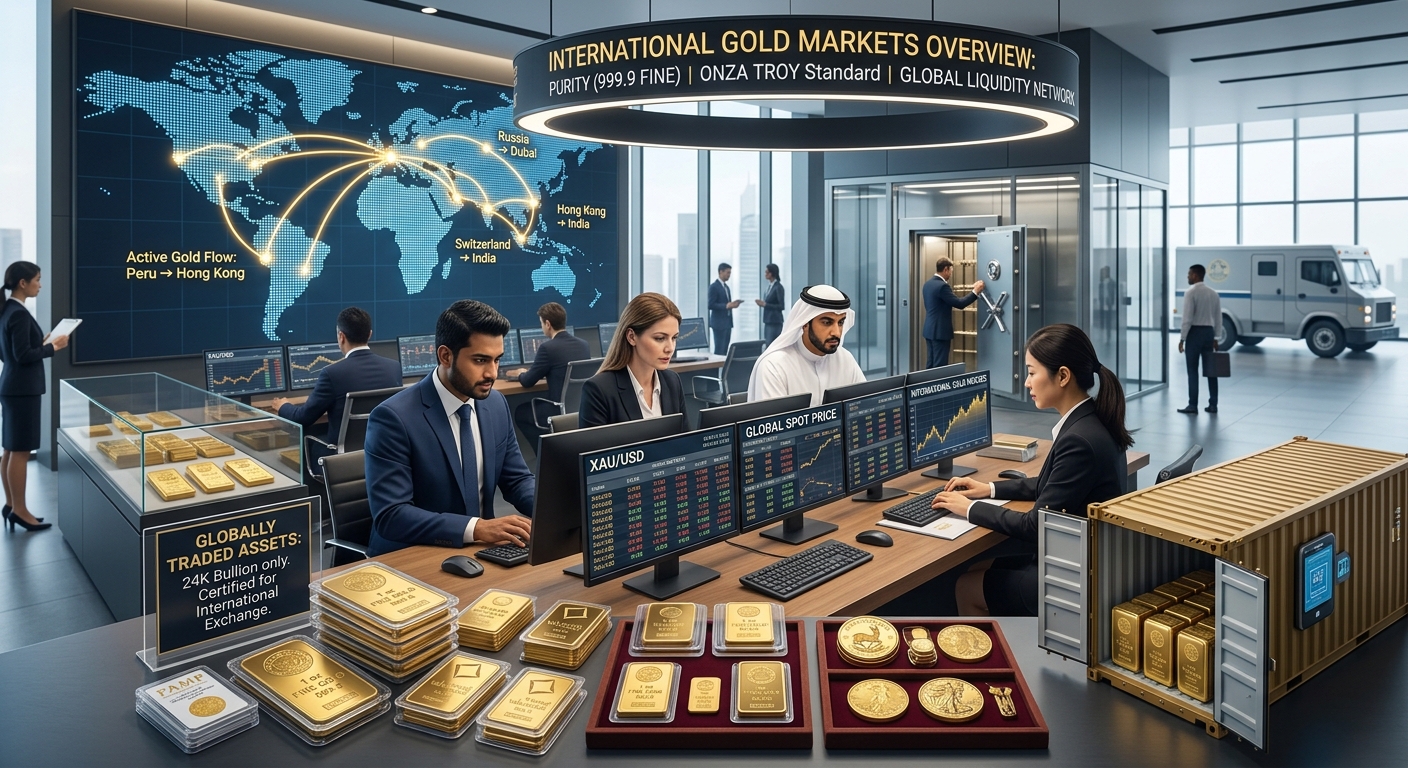
In the global precious metals market, gold operates under strict conventions that facilitate its valuation, liquidity, and cross-border trade. However, when an investor or buyer enters Thailand’s gold market, they encounter a financial and goldsmithing ecosystem with its own rules that differ substantially from Western standards.
Understanding the technical gap between traditional Thai gold and international investment gold is indispensable before making any purchase. Both categories represent high-value tangible assets, but they operate under different parameters across three critical dimensions: purity percentage, metrological weight unit, and pricing and liquidity structure. Below is a technical and comparative analysis of the fundamental differences between Thai gold and international gold.
Differences in purity: the 96.5% standard vs. 24K and 18K
The most obvious distinction between Thai gold and gold traded in Europe, the Americas, or international financial markets lies in the alloy’s metallurgical composition.
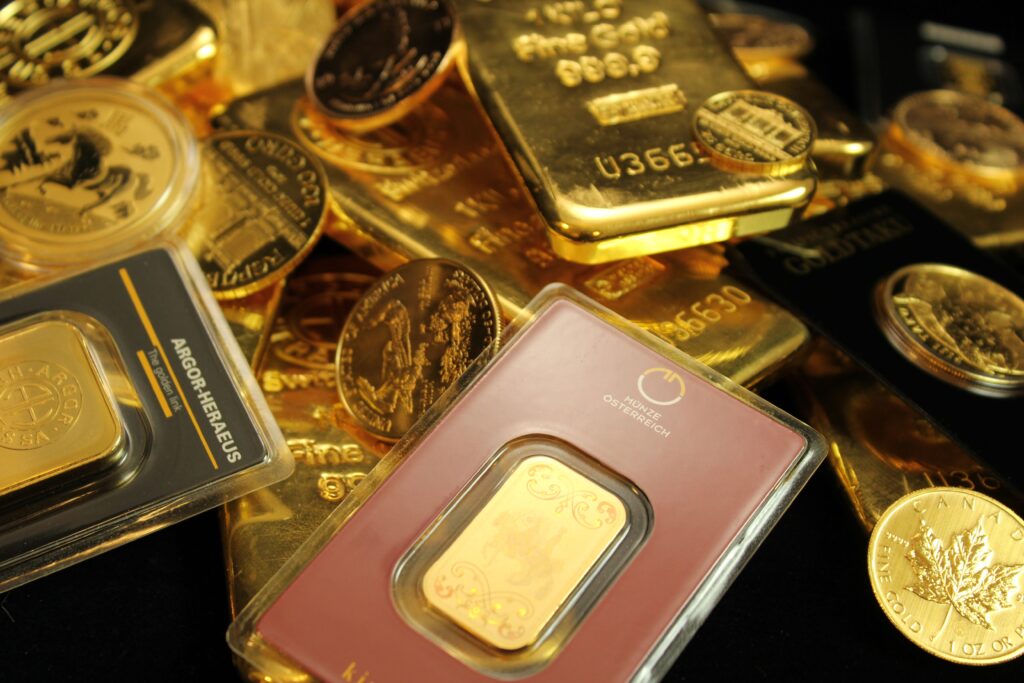
In global markets overseen by organizations such as the LBMA (London Bullion Market Association), there is a sharp separation between gold intended for investment and gold used in jewelry. Investment bars and coins (24K) require a minimum purity of 99.5% to 99.99%. Their purpose is pure capital accumulation, but their extreme malleability makes the metal too soft to withstand the mechanical wear of everyday jewelry.
Commercial Western jewelry (18K and 14K) drastically reduces the fine gold content to provide hardness and alter the metal’s hue. 18-karat gold contains only 75.0% pure gold (with the remaining 25% being silver, copper, palladium, or zinc), while 14-karat drops to 58.3%.
Thailand unified both functions—store of value and wearable goldsmithing—through a strict national standard set at 96.5% purity (equivalent to approximately 23.16 karats), where the 3.5% of traditional alloying metals (mainly silver and copper in exact proportions) provides the structural rigidity necessary to craft chains, bracelets, and bars resistant to daily wear without sacrificing virtually any purity.
Containing 96.5% fine gold, the metal exhibits an intense, warm, deep solar-yellow hue, quite distinct from the pale, greenish, or pinkish yellow that characterizes Western 18K or 14K alloys.
Differences in weight: the “Gold Baht” vs. the Troy Ounce and the Gram
While global trade uses the metric system (grams and kilograms) and the imperial precious metals system (troy ounces), Thailand preserves its own historical unit of mass: the Gold Baht (Thong Baht).
The Troy Ounce is the benchmark unit for global stock market quotes (spot price). It equals exactly 31.1034768 grams. Standard bank bullion bars usually come in 1-ounce, 100-gram, or 1-kilogram formats (32.15 troy ounces).
In Thailand’s jewelry shops and gold houses, weight is not traded in troy ounces but in Gold Bahts—a term that shares its name with the national currency, the Thai Baht (THB), but functions as a physical unit of mass. Two official equivalencies exist depending on the asset format: 1 Gold Baht in Jewelry (Thong Rupphan) equals exactly 15.244 grams (commercially rounded to 15.24 g), and 1 Gold Baht in Bullion (Thong Kham Thaeng) equals exactly 15.20 grams (with a minimum tolerance margin of ±0.05 g).
Furthermore, to facilitate gradual savings for retail consumers, the Baht is subdivided into exact fractional units, where 2 Salung (1/2 Baht) represent 7.62 grams in jewelry, and 1 Salung (1/4 Baht) is 3.81 grams in jewelry.
Differences in value, margins, and liquidity
The way the purchase price is set, the added manufacturing costs, and the ease of converting gold back into cash present decisive contrasts for the investor.
In Western 18K jewelry, the buyer usually pays a considerable markup for design, branding, and distribution costs; in many cases, the metal’s intrinsic value represents less than half the retail price, creating a significant immediate loss if the piece is resold. In Thailand, the Gold Traders Association publishes official buying and selling prices for 96.5% gold several times a day, expressed in Thai Baht per Baht of weight.
For 96.5% Thai bullion bars, this manufacturing fee is zero or nominal. For simple traditional chains and bracelets, it represents a very small fixed amount. This ensures that virtually all disbursed capital remains backed by the actual weight of the gold.
Regional Liquidity vs. Global Liquidity
Buyback efficiency depends directly on the geographic location where the settlement takes place. Within Thailand and Southeast Asia, 96.5% of Thai gold enjoys immediate liquidity. Any accredited establishment that is a member of the trade association repurchases bars or jewelry bearing its hallmark of origin within minutes, applying an extremely narrow spread between the buying and selling price (typically under 1%–2% for bullion).
Outside of Asia, 96.5% of gold loses its immediate standardization advantage. Since Western refineries and dealers operate under the LBMA-certified 24K (99.9%) standard, Thai workshop hallmarks lack automatic recognition. When selling Thai gold in the West, buyers will require purity verification via X-ray fluorescence (XRF) spectrometry or assaying and will apply a discount against the international spot price (which can range between 5% and 15%) to cover melting and refining costs up to 99.9%.
Which one should you choose?
The choice between Thai gold and international gold depends on the buyer’s operational and geographic profile. International 24K (99.9%) gold with LBMA certification is the optimal alternative for global investors residing in Europe or the Americas who seek maximum cross-border liquidity and wish to store bars or coins without refining friction.
For its part, 23K (96.5%) Thai gold is a superior option for those living in, frequently traveling to, or maintaining commercial ties in Southeast Asia, as well as for those who want to combine efficient wealth accumulation with functional goldsmith pieces of ultra-high purity and low acquisition costs.
What are your thoughts on this topic? Would you like to learn more about the differences between Thai and international gold?
If you are interested in buying Thai gold, you can contact us by visiting the following link.
Image by Zlaťáky.cz via Pexels.com under Creative Commons license.